
Trusted By Over 250,000 Customers!
No Interest, No Payments for 12 months on Select Products
No Interest, No Payments for 12 months on Select Products
A house with large windows is a perk not everyone can brag about. Yet, what stands out as a unique architectural feature could make interior design a challenge. Placing furniture in front of a window that takes over the entire room could be a key to balancing the space.
However, how can you do that without blocking the natural light and keeping the right proportions? If you’re working with larger architectural features like picture windows or bay windows, thoughtful placement matters even more.
We’ll explore the best furniture placement for windows that maximize natural light and improve the functionality of your home.
Placing furniture in front of a window requires careful proportioning. You have to get the proportions right to ensure the space stays functional and well-lit at the same time. Measuring the dimensions is just one part of the equation. There are a few more aspects to remember before putting furniture in front of a window.
The benefits of bathing your space in abundant levels of sunlight are countless. First, think of natural light as a mood booster. With better vitamin D levels, occupants of well-illuminated spaces are likely to feel happier than those living in darker interiors. Natural light makes even cramped areas feel more open and airy. If your room is already spacious enough, sunlight can become a strong design statement that speaks for itself.
While styles and trends in interior design change, architects have always integrated large windows into layouts to make the homes as naturally lit as possible. Natural light visually expands interior spaces and supports more efficient lighting use. With more daylight reaching the room, reliance on artificial lighting decreases during daytime hours.
That said, you don’t want to take away any considerable amount of natural light from your windows by blocking them with furniture. If daylight control becomes tricky due to aging frames or cloudy glass due to humidity build-up, reviewing window replacement options can help optimize brightness and clarity.
When setting up the window area design, ensure the decor elements complement the space without overwhelming it or taking up the view.
If your home has strong exterior views, avoid placing bulky décor that significantly obstructs the sightline. That’s why planning your window area design for functionality and optimal exterior views is critical. Homeowners with larger features like bow windows often benefit from lower-profile furniture to maintain uninterrupted sightlines.
Room balance means focusing on window decor ideas and design principles capable of maximizing natural light. But how do you achieve that?
The simple answer is just to leave your window area design to a minimum. While that can be a great option in some cases, not every indoor space allows for the free arrangement of necessary furniture and decor. If you’re limited in square feet, knowing how to use each practically is a must.
When striving to reach a balance between aesthetics and functionality in your space, think of low-profile furniture. Focus on airy furniture designs that create a single visual plane that opens up the space and brings natural light in. Plus, a fitting color palette and a smart combination of textures go a long way.
For rooms with ventilation needs, slimmer window styles such as casement windows or slider windows also help maintain openness.
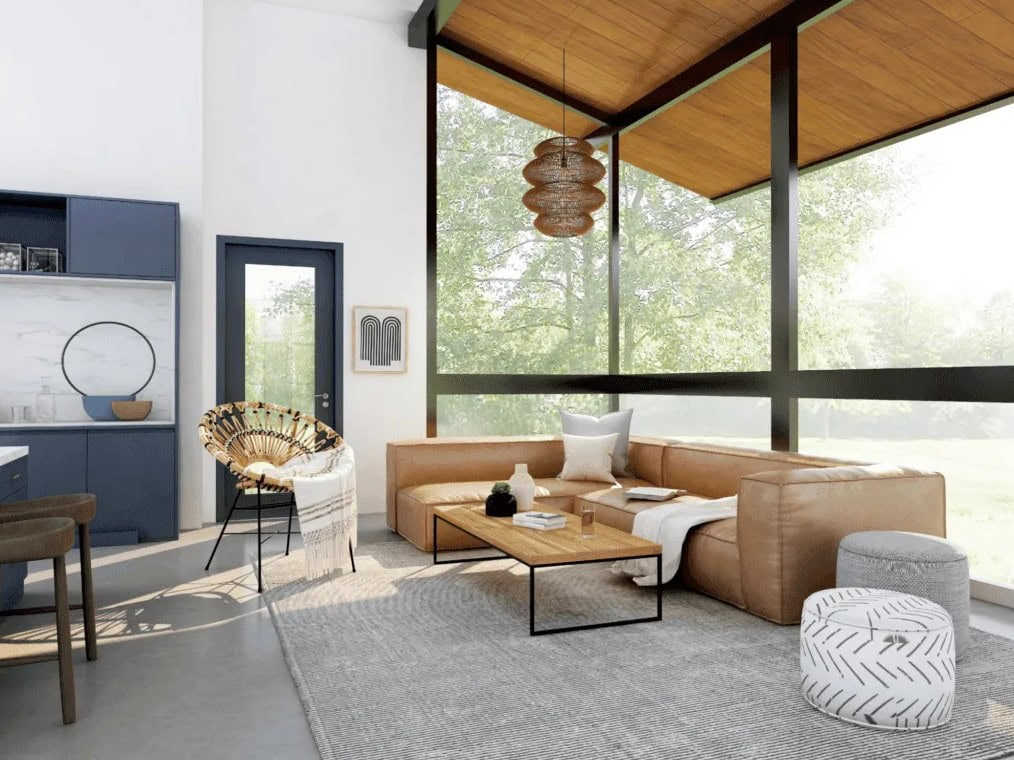
You can’t simply put any furniture in front of the window and expect it to work. Some options that usually look best in front of large windows include:
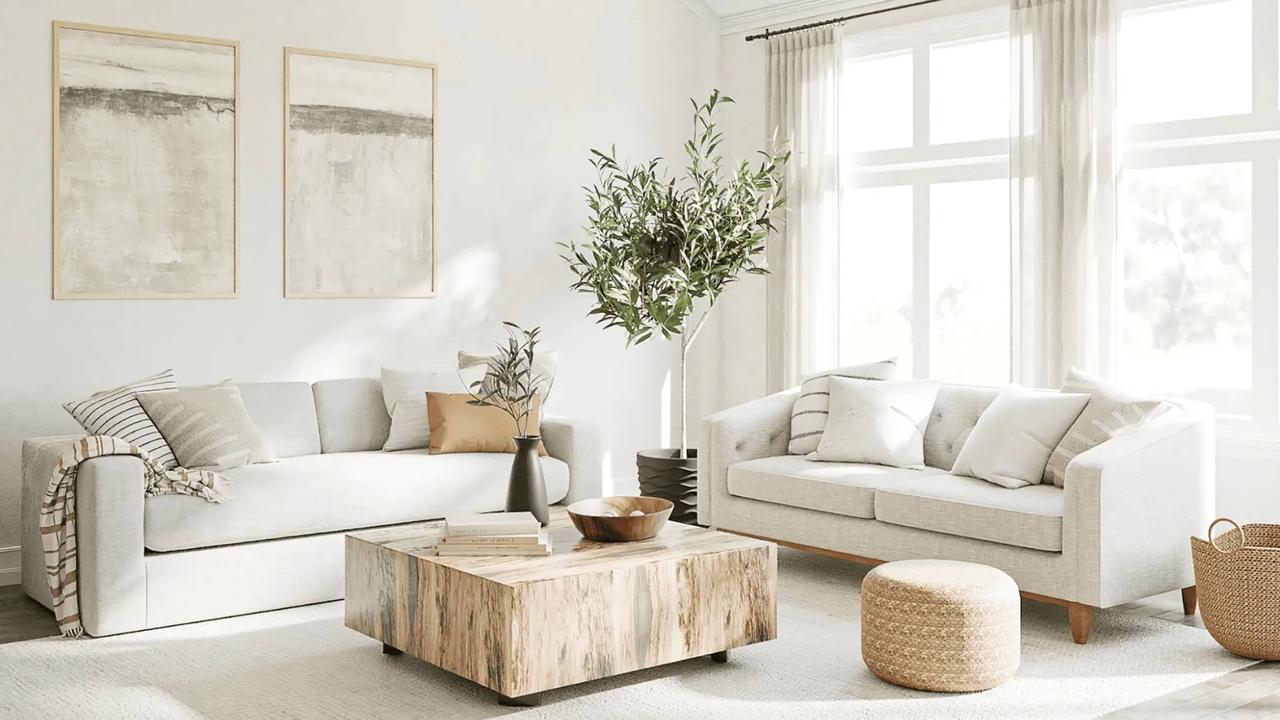
Sofas: A couch is a focal point of any room, and it takes a lot of space. Consider the size of the sofa to ensure it doesn’t obstruct the light from getting in. Go for a corner sofa if it fits your layout better, or opt for a fair-colored couch to maximize light reflection. If you have enough room, position the sofa at a slight distance from the window wall to achieve the look of floating furniture.
A window seat: If your room layout allows for a dedicated window seat area, be sure to seize this opportunity. Fill this space with comfy pillows to create a snug spot that leverages the natural light it bathes in.
A low bookcase: For extra storage, install a handy bookcase under the window. The broader the window, the more space you have to put your favorite literature on display. Consider a custom-made bookshelf for proper integration into your current window area design.
A coffee table: A small coffee table positioned to face the view can make the most of available natural light and open sightlines. It’s a comfortable spot to sit and enjoy natural light throughout the day.
Cabinets: Optimize storage by adding some hidden cabinets under the window frame. Go for built-in cabinets that could also serve as a seating area. Opt for color palettes (and finishes) that blend smoothly with the aesthetics of your place.
Statement armchairs: A comfortable armchair overlooking the view of your floor-to-ceiling window gives a touch of serenity to your day. If your space allows, put a pair of cozy armchairs for an instant conversation den.
Nightstands: If your bedroom features large windows, consider low-profile nightstands to add some functional storage to your space.
Being intentional with window treatments and furniture positioning is pivotal for a smart interior design. First and foremost, when working with operable windows, ensure the furniture arrangement allows the sash, crank, or sliding panel to open fully for ventilation and access.
For more design tips, consider the following window furniture arrangement tips to get started:
Get things measured: Measure the height of the furniture pieces you’d like to position in front of your window. Write down the window sill height. For example, if you’re considering placing a sofa right against your windows, ensure its back doesn’t extend more than a few inches above the sill. If the couch or any other piece of furniture you have in mind goes above the sill considerably, widen its proximity to the window wall. Remember: the higher the furniture piece, the further into the room it goes.
Follow the ⅔ rule: Place two-thirds of the visual design weight on one side of the room and leave the remaining one-third for the other. For example, place a pair of chunky armchairs and a coffee table against the window wall and balance the furniture distribution by positioning the sofa against the opposite wall. Apply this rule to the color distribution and arrangement of accessories within your space as well.
Stick to light colors: Lighter furniture pieces and decor elements of softer hues will more effectively reflect the light. An extra benefit: fading is less visually noticeable on lighter fabrics, helping the furniture maintain a consistent appearance over time. If fading is a concern, consider windows with advanced coatings like energy-efficient windows to reduce UV exposure.
Opt for designs that are both aesthetically fitting and functional: Prioritize versatile design ideas. For example, consider installing built-in cabinets that also offer extra seating space for you and your loved ones to enjoy.
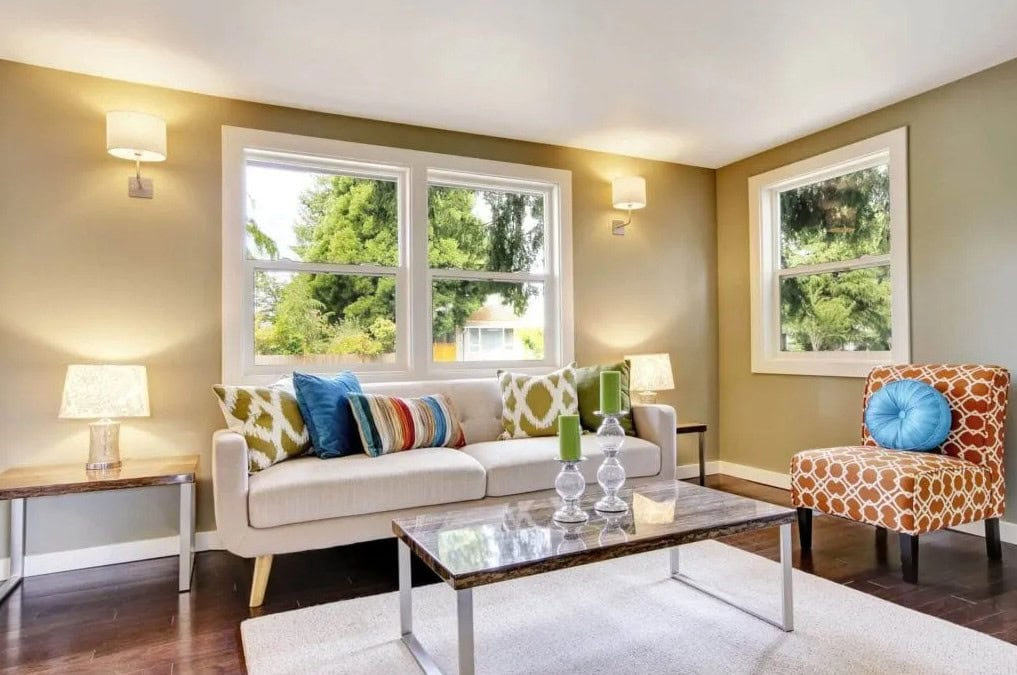
Getting your furniture placed around the window area the right way means knowing the traps to look out for. Here are some of the most common mistakes you should avoid:
Mismatched color palettes: Placing a brightly colored sofa in an otherwise muted room can be an effective design choice. However, too many dark tones can make the space feel cramped. Besides, darker hues absorb light instead of reflecting it.
No greenery: Failing to arrange a complementary set of a few plants and furniture by the windows drains the liveliness from your room.
Dull-colored drapery: Instead of dark drapes that prevent the light from getting in, opt for sheer curtains to add an intimate touch to the space without obstructing light.
Furniture too close against the wall: Placing the furniture across the perimeter of your room, leaving too little or no space against the wall, is a common pitfall. Though you free up some space in the center, the perimeter of the room can start to feel visually crowded.
Not following local building codes: In bedrooms, confirm the window remains accessible as an emergency exit point if local building codes require egress access.
The wide range of modern furniture available for window areas allows you to enhance almost any room with pieces that fit both size and aesthetics. Below is a short yet handy list of the most common rooms where placing furniture in front of a window might become an absolute gem of an idea.
Living room: In most apartment layouts, the living room gets a sizable chunk of space. So, feel free to unleash your creativity when arranging living room furniture near the window. Consider putting a low-profile cushioned bench under the window for a cozy seating area. Another approach would be to put armchairs on both sides of the window for some spatial framing.
Bedroom: A well-lit bedroom is a key to improving your leisure time. Try to leave the area around the window as open as possible. For extra seating, opt for a pair of slim-looking chairs. Plus, frame the window with sheer curtains for privacy without blocking light.
Home office: The best home office window furniture ideas maximize natural light to improve the dweller’s productivity. Be strategic when placing furniture in front of a window within your workspace. Position a desk in the area that gets the most natural light to reduce eye strain from artificial fixtures. Place a plant stand there for an extra touch of greenery.
Kitchen: Put a coffee table near the window to level up your dining experience with more glimpses of light getting in. Complement the setting with a nice pair of comfortable chairs.
If you find it challenging to envision ways to position furniture in front of a window, start surfing the web for inspiration! You can have a look at our realized projects or find relevant articles on our blog, such as our post on comparing single, double, and triple-pane windows or what basic window ratings mean when evaluating options.
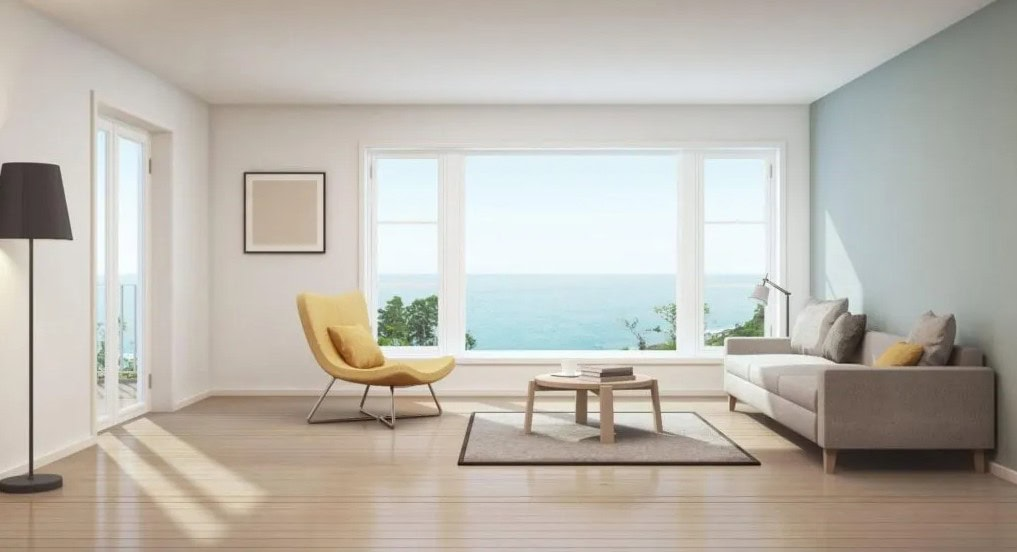
Your layout is the primary factor determining how much natural light reaches your living space. If you’re at the planning stage of the construction, it’s worth reflecting on the most feasible ways to welcome natural light. Strategic window placement and, where structurally feasible, features like skylights can increase daylight and support airflow in the space.
Strategic furniture placement and the proper color palette also affect how well your place welcomes sunlight and retains it. The focal point here is to preserve as much natural light as possible. Ensure the area around the windows isn’t cramped with excessive decor and furniture pieces. Opt for a lighter-colored palette for your interior design to get the maximum amount of light dispersed within the space.
Light sets the tone for comfort and atmosphere in any living space. Thoughtful placement of furniture and decor that maximizes natural lighting is essential. When positioning furniture near windows, follow two key principles: prioritize natural light over excessive decor, and choose lighter interior colors to enhance brightness. Achieving the ideal balance between ample lighting and functional design can be challenging, but it’s well worth the effort.
Contact us to get professional assistance and upgrade your windows in your space to the best option!
Is it okay to place a sofa in front of a window?
It is absolutely fine to place a sofa in front of a window if it doesn’t block the natural light. Ensure the back of the couch doesn’t extend the window sill by more than a few inches. If it does, bring the sofa slightly further into the room.
How do I choose the right size of furniture for window areas?
To choose the right size of furniture for window areas, measure everything accurately. Start with the window sill and move from there. Ensure the furniture pieces you plan on putting in front of the window don’t extend the window sill more than a few inches.
Can furniture in front of windows reduce energy efficiency?
Yes, placing furniture in front of windows can reduce the energy efficiency of your space by obstructing natural light from getting in. The lack of natural light means you rely on artificial illuminators heavily. Choosing more effective options such as energy-efficient windows can help preserve brightness (and save you money on your energy bill, too!)
What is the ⅔ rule for furniture?
The ⅔ rule for furniture is a golden rule for positioning the furniture strategically to achieve aesthetically pleasing proportions. According to this rule, place two-thirds of the furniture pieces within your space on one side of the room and leave the rest for the other.
How do I style a bedroom with a bed in front of the window?
If you want to style a bedroom with a bed in front of the window, focus on getting the proportions right. Follow the ⅔ rule to distribute the furniture across the space. If the headboard of your bed extends the window sill by more than a few inches, opt for having it tailored to fit your space.

As a content manager at Renuity, Francheska spent nearly two years helping homeowners discover the possibilities of transforming their spaces. Renuity is a leader in home remodeling, specializing in everything from windows and doors to bathrooms and home storage solutions, and she’s proud to be part of a team that prioritizes quality, innovation, and customer satisfaction. She graduated from Florida International University with a double major in International Business and Marketing, ranked among the top programs in the nation. Her passion for home improvement runs deep—since childhood, she’s been inspired by watching HGTV and seeing the magic of remodels come to life. Now, she channels that passion into connecting readers with ideas, tips, and solutions to create homes they love.
Renuity is backed by top industry ratings and trusted by homeowners nationwide for quality, service, and reliability.





Offer expires:
plus 12 months, no interest,no or low monthly payments
claim offer
Get a free, no-obligation estimate and see how easy it is to upgrade to your dream home. One of our local specialists will reach out to schedule your consultation—on your terms.
At Renuity, our greatest pride comes from the trust homeowners place in us and the lasting results we deliver. From seamless installations to transformative home upgrades, we’re committed to making every project simple, stress-free, and built to last. Our family of regional brands includes some of the most respected names in remodeling nationwide, all united by proven expertise and a shared commitment to exceptional service. See how we’ve made a difference for families nationwide and what they have to say about their experiences with Renuity.

Very professional, pleasant, ahead of schedule . Dealing with Danny Guthrie was pleasant and answered all our questions. Their were no other surprise costs. We loved the service, the contractors wer...
All the people we have dealt with from Renuity from the sales rep, office administration & the installers, have been very good to deal with. On the first day of the installation, they found dry rot un...
This was a very pleasant experience. Lance, my salesperson, was very professional and understood my concerns and needs. Blake and Sebastian, the installers of my new shower remodel, were friendly, har...
We have used Renuity Home Improvement (formerly FHIA) five different times, and every experience has been excellent. They replaced the windows in our previous two homes, completed our parents’ two hom...
We are so pleased with our new shower ! The installing crew were friendly, professional and on time. The appearance of the modern shower is so lovely. We would recommend this company 100% if you wa...
Excellent salesman Wesley was .kind, friendly and knowledgeable...great guy. The brothers were Excellent and beyond, superb work by them and they were fast with the installation. No better place to h...
We had a roof and windows installed by this company. We had 4 companies we were interviewing. FHIA was the second one we met with. Josh came to our home to present their products and servies to us. I...
Great workmanship. Great job. The workers was very professional and explained the installation. Clean up after the job was completed. I would definitely recommend this crew to anyone interest. Thanks...
Conde was very nice and professional with his work , and they kept me informed of the job as it went forward. These are nice windows that should be trouble free for a long time. They were thorough thr...
Now that windows all installed I am pleased with the work, clean up, craftsmanship of products I am pleased. Conscientious of others property. Installed with great care of surroundings. Do recommend...