
Trusted By Over 250,000 Customers!
No Interest, No Payments for 12 months on Select Products
No Interest, No Payments for 12 months on Select Products
Energy efficient doors reduce heat transfer, limit air leakage, and hold a tighter seal against the frame than older or uninsulated models. That combination keeps your home more comfortable, reduces how hard your HVAC system has to work, and can contribute to better noise reduction and security depending on the door type.
Renuity installs energy efficient doors across every major door type, from entry doors to sliding glass to hurricane-rated. This guide covers what drives energy performance so you can make an informed decision.
Your home loses conditioned air through its doors in two ways: air leakage and conduction. Air leakage happens when gaps around the slab, at the threshold, or along the frame let heated or cooled air escape. Conduction happens when heat moves through the door material itself. Both force your heating and cooling system to run longer to hold the temperature you set.
The U.S. Department of Energy notes that exterior doors contribute significantly to air leakage and conduction loss, especially older doors that are uninsulated or improperly sealed. According to the EPA, air leakage accounts for 25 to 40 percent of heating and cooling energy use in a typical home. Doors and windows are named contributors to that figure. An underperforming door adds run time to your HVAC system every hour of every day.
Three numbers appear on the label of a rated door. Each one measures something different, and knowing what they mean makes it easier to compare products.
U-factor measures how quickly heat moves through the full door assembly: slab, frame, and glass. A lower U-factor means heat moves through more slowly. Most modern exterior doors fall between 0.15 and 0.40. The closer to 0.15, the better the door holds temperature.
R-value measures resistance to heat flow. It is the inverse of U-factor: when U-factor goes down, R-value goes up. You will see R-value used more often for wall and attic insulation, but the relationship is direct. A door with a U-factor of 0.20 has roughly twice the insulating resistance of one rated at 0.40.
SHGC (Solar Heat Gain Coefficient) applies only to glass. It measures how much of the sun's heat passes through. The scale runs from 0 to 1. A rating of 0.25 means 25 percent of solar heat gets through; the rest is blocked. In hot climates where cooling costs are the main concern, a lower SHGC matters most. In cold climates where some passive solar heat is welcome, a slightly higher number can work in your favor.
When comparing doors, start with U-factor. Use SHGC as a secondary filter based on your climate and how much glass the door includes.
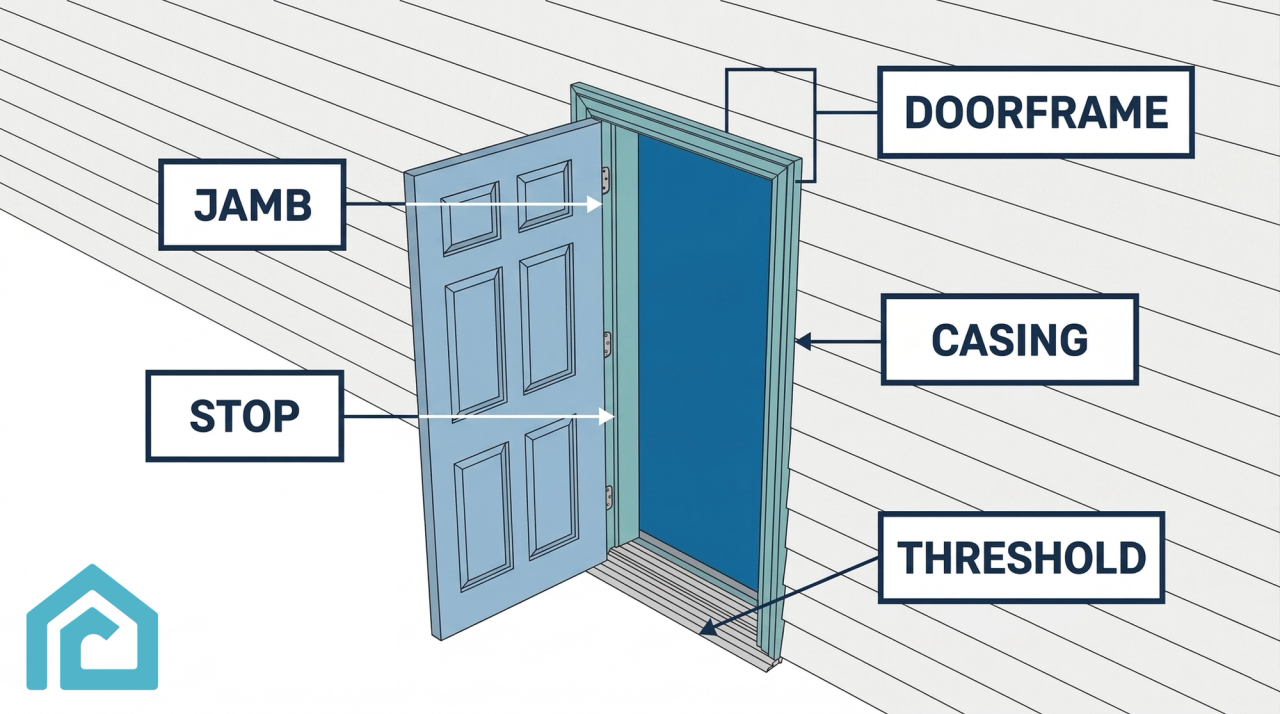
A door's energy rating is tested under controlled conditions with a properly fitted frame. How it performs in your home depends on the condition of the rough opening. The door jamb, which is the vertical frame the slab closes against on both sides, has to be straight, solid, and free of rot or warping for the weatherstripping to seal correctly. If the jamb has shifted or deteriorated, the slab cannot sit flush. That gap runs the full height of the door and bypasses the insulation in the slab entirely. This is why frame assessment is a required part of any door replacement.
A solid entry door's thermal performance comes from its core. Polyurethane foam fill, the standard in modern insulated doors, provides much higher R-value per inch than wood or hollow construction. Steel and fiberglass doors can both use foam cores. The frame material determines whether that insulation holds at the edges. Steel frames conduct heat faster than fiberglass unless they include a thermal break, which is a non-conductive strip that interrupts the path between the interior and exterior metal surfaces.
Material choice also affects long-term performance. A wood door that swells in humid weather puts stress on the weatherstripping seal each time it cycles. That accelerates wear. A fiberglass door stays dimensionally stable, so the seal does not shift. For a full comparison of how the three materials perform on durability, maintenance, and cost, see our guide to fiberglass vs. wood vs. steel front doors.
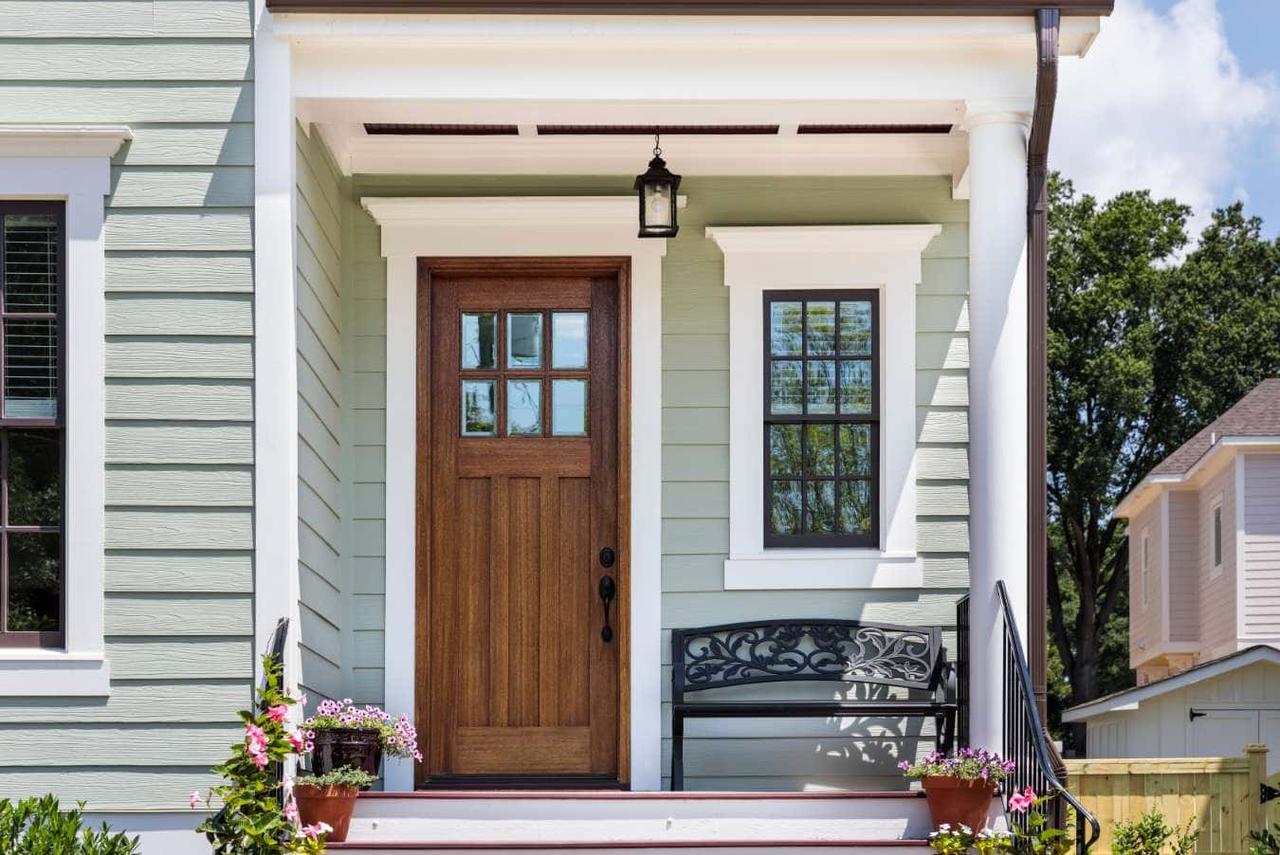
If your entry door is more than 15 years old, the foam core may have compressed, the weatherstripping has likely lost its shape, and the threshold seal has probably worn unevenly. Any of those conditions increase air infiltration regardless of what the original rating was. Browse entry door options to see what current models offer.
Patio doors present a different energy challenge than solid entry doors because glass is a poor insulator. A standard single-pane glass panel loses heat roughly 10 times faster than an insulated wall of the same size. Modern patio doors use double-pane or triple-pane glass units filled with argon gas, combined with a low-emissivity (Low-E) coating on the glass surface. The coating reflects infrared heat without blocking visible light. That keeps the glass from acting as a direct heat transfer path in either direction.
Frame material matters more on patio doors than on solid doors because the glass takes up a larger share of the total area. Vinyl frames insulate well and do not conduct heat the way aluminum does. Aluminum frames require a thermal break to perform at a comparable level.
A common question: do patio doors with built-in blinds between the glass panes perform better on energy efficiency? No. The blinds sit inside the sealed air space between panes and do not add a meaningful insulating layer. Their function is light and privacy control. The glass unit's U-factor and Low-E coating determine the energy rating. Browse patio door options.

Sliding doors share the same glass performance factors as patio doors, with one added consideration: the sliding track. A sliding door does not compress against a frame the way a hinged door does. It rides in a channel, and that channel is a consistent air leakage path at the bottom of the door. Over time, the seal along the track degrades and the panels may no longer sit flush with the frame edges.
Frame material has a direct effect on heat transfer at the perimeter. Vinyl frames provide a natural thermal break. Aluminum frames without one connect the outdoor temperature to the interior surface, which causes condensation in cold weather and heat transfer in summer. When comparing sliding doors, check both the glass unit ratings and the frame material. See sliding door options.
French doors use two hinged slabs that meet at the center. That center seam is the primary energy vulnerability. On a single hinged door, the slab seals against a fixed stop on three sides. On French doors, one slab seals against the frame on two sides and against the second slab at the center. That joint requires an astragal, a vertical strip that one slab latches against, to close the gap. If the astragal or its weatherstripping is worn, air can leak through the center of both slabs at the same time.
Glass panels in French doors follow the same rules as patio doors: double or triple pane with Low-E coating and argon fill outperform standard glazing. French doors with large glass panels have less insulated slab area per square foot than solid doors, so the glass unit rating carries more weight in the overall performance. Compared to sliding doors, French doors create a tighter perimeter seal when latched because hinged slabs compress against weatherstripping rather than riding a track. See French door options.
Hurricane and impact doors are built to meet structural standards that produce strong energy efficiency as a byproduct. To earn impact certification, a door must resist forced entry and high wind loads. That requires multi-point locking systems that pull the slab tightly against the frame at several points along its height, not just at the latch. That same compression creates an effective thermal seal.
The laminated glass required for impact certification also performs well on thermal efficiency. Laminated glass bonds two panes around an interlayer, which interrupts direct heat conduction through the glass. Combined with Low-E coatings, impact-rated glass can approach the thermal performance of standard insulated glass units. Reinforced frames also reduce air infiltration at the perimeter. Homeowners who need storm protection often get better thermal performance than they expected, because the structural requirements raise the energy performance along with them. Learn more about hurricane doors and impact doors.
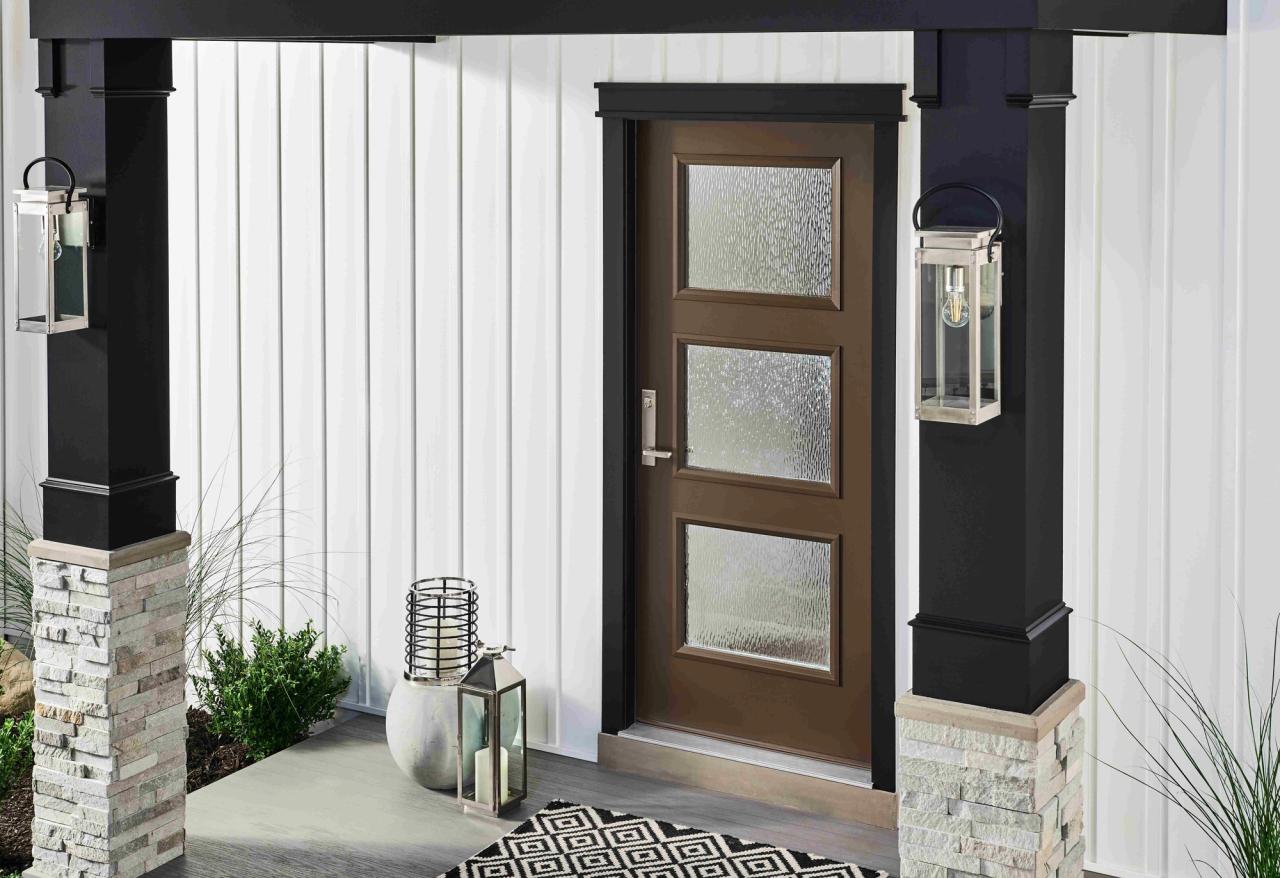
A door's energy rating is a lab measurement. How it performs once installed depends on the condition of the rough opening and how carefully the installation is done. The opening has to be checked for plumb, level, and square before the new frame goes in. If it is out of square by even a small amount, the slab sits unevenly against the weatherstripping, which creates a gap on one side regardless of how good the door is.
Sill pan flashing directs water that gets past the threshold away from the subfloor. Skipping it does not cause an immediate energy problem, but water at the sill leads to rot and frame damage that will break the seal within a few years. The gap between the new frame and the rough framing is filled with low-expansion foam. Too much standard expanding foam bows the frame inward, which distorts the slab geometry and breaks the seal. Properly applied, it closes the air path without stressing the frame.
These are not problems that show up right away. A poorly installed door may perform adequately for the first year and decline gradually as small issues compound. Learn more about Renuity's door installation process.
If your current door is drafty, difficult to latch, or showing wear at the frame or threshold, the energy performance has already dropped from what it was when the door was new. The frame, the slab insulation, and the weatherstripping all degrade on separate timelines. A full opening assessment addresses all three. Renuity handles door replacement from assessment through installation. Start with a free in-home consultation to get an accurate picture of what your current door is costing you.

As a content manager at Renuity, Francheska spent nearly two years helping homeowners discover the possibilities of transforming their spaces. Renuity is a leader in home remodeling, specializing in everything from windows and doors to bathrooms and home storage solutions, and she’s proud to be part of a team that prioritizes quality, innovation, and customer satisfaction. She graduated from Florida International University with a double major in International Business and Marketing, ranked among the top programs in the nation. Her passion for home improvement runs deep—since childhood, she’s been inspired by watching HGTV and seeing the magic of remodels come to life. Now, she channels that passion into connecting readers with ideas, tips, and solutions to create homes they love.
Renuity is backed by top industry ratings and trusted by homeowners nationwide for quality, service, and reliability.





Offer expires:
plus 12 months, no interest,no or low monthly payments
claim offer
Get a free, no-obligation estimate and see how easy it is to upgrade to your dream home. One of our local specialists will reach out to schedule your consultation—on your terms.
At Renuity, our greatest pride comes from the trust homeowners place in us and the lasting results we deliver. From seamless installations to transformative home upgrades, we’re committed to making every project simple, stress-free, and built to last. Our family of regional brands includes some of the most respected names in remodeling nationwide, all united by proven expertise and a shared commitment to exceptional service. See how we’ve made a difference for families nationwide and what they have to say about their experiences with Renuity.

I would highly recommend the sales person, installers and the product itself! Another thing I really appreciated was how the whole team assigned to our project kept us totally informed or arrival time...
Renuity did an excellent job with my bathrooms. I highly recommend the entire experience from consultation to installation.
Mario provided excellent customer service when he came to replace the handle on our impact doors. He was very polite, professional, informative, and knowledgeable. He took the time to explain everythi...
Started out a little rough. The sales report did not get our full vision. Went into the office to cancel. The area manager Ashley-Bills Lagana fixed all our problems and areas of concern. Our bathroom...
Mike Post was very informative. He provided a great presentation of the products they offered. He listened to me to understand my needs and then met those needs.This was the first person I had come by...
Renuity isn’t the least expensive choice for a bath remodel, but their Kohler products and company work ethic are worth every penny. It was very easy to review my choices and set up a plan that fit my...
I don't have before pictures, but there was a 1970's plastic party tub!!!. No shower. Replaced it with a Kohler shower. Absolutely love it!!!. The salesperson was amazing. The install took 2 days. We...
Can't say enough good things about how an amazing job they did. Not only did I have them do my garage floor but they also provided a service to paint my entire garage that was unfinished. Very flexibl...
Maikel and Marcos have been wonderful, very efficient, and friendly. I'd recommend them to anyone that needs window installation. I also would like to mention John, the consultant at the Benjamin Rd....
We are very pleased with our Renuity cabinet refacing project. The finished cabinets look beautiful, and the team worked hard to ensure everything was completed to our satisfaction, resulting in a gre...