
Trusted By Over 250,000 Customers!
No Interest, No Payments for 12 months on Select Products
No Interest, No Payments for 12 months on Select Products
If you’re replacing windows, vinyl is probably the first material you’ll encounter. It dominates the replacement window market for good reason: it holds up well, costs less to maintain than wood, and performs reliably in most climates. It’s a great choice for many homeowners, but as with every home, your answer may depend on your specific needs.
This guide covers what vinyl windows actually do well, where they might not be the optimal choice, and how they stack up against the other materials you’ll likely consider. If you’d like to talk through what makes sense for your home specifically, Renuity offers a free in-home consultation with no obligation to purchase.
Vinyl frames don’t conduct heat the way metal does. That matters because a frame that transfers heat easily works against your insulation, letting warm air out in winter and in during summer regardless of how good the glass is.
Modern vinyl frames are built with multiple hollow chambers inside the frame profile. Those chambers trap air, which slows heat transfer and contributes to a lower U-factor, which is the number that tells you how well a window resists heat loss. Paired with double- or triple-pane glass and a low-E coating, energy-efficient vinyl windows can meaningfully reduce what you spend on heating and cooling. The EPA estimates that replacing single-pane windows with energy-efficient models can cut energy bills by up to 15 percent. How much you actually save depends on your climate, your current windows, and how well the new ones are installed.
Wood windows need to be repainted or restained periodically. Aluminum can oxidize. However, vinyl doesn’t require experience either issue that would work against its appeal. The color runs through the material during manufacturing, so there’s nothing to peel, chip, or flake off.
Cleaning vinyl windows means soap and water, and that’s it for most homeowners. The frames don’t rot, they don’t attract termites, and they don’t rust. For anyone who wants a window that stays out of the way once it’s installed, vinyl is hard to argue against.
Vinyl handles temperature swings well. It expands and contracts with heat and cold without cracking or warping under normal conditions. A properly installed vinyl window maintains its seal over time, which is what prevents the drafts and condensation between panes that signal a window is failing. If you’re noticing either of those in your current windows, that’s a sign they’ve reached the end of their useful life.
Understanding basic window performance ratings, like U-factor, solar heat gain coefficient, air leakage, gives you a reliable way to compare vinyl products against each other and against other materials before you buy.
Vinyl is easier to mold than wood or metal, which means manufacturers can produce it in a wider range of shapes and sizes. If your home has arched openings, angled walls, or any non-standard window placement, vinyl is more likely to accommodate them than other materials.
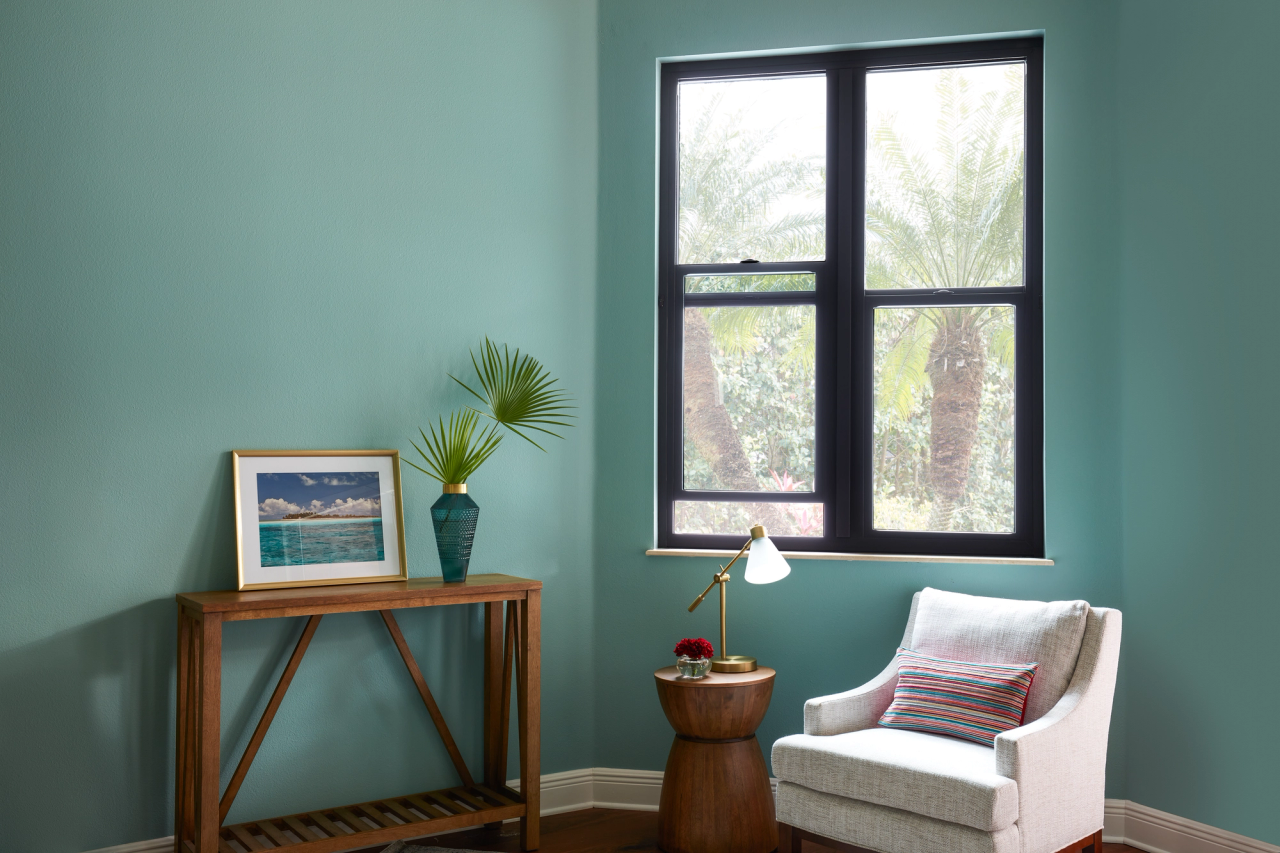
Color options have expanded significantly for vinyl windows since they’ve been introduced to the market. Beyond the standard white and beige, most manufacturers now offer darker exteriors including black, bronze, and dark gray. Black vinyl windows have become a popular choice for homeowners who want stronger visual contrast, particularly on lighter exteriors.
The tradeoff worth knowing: darker frames absorb more heat than lighter ones, which can increase thermal expansion over time. Quality matters here, too; premium vinyl lines use co-extruded capstock layers on the exterior that resist fading and handle heat absorption better than base-grade vinyl. If you’re drawn to black frames, ask specifically about the manufacturer’s heat and fade performance data before committing.
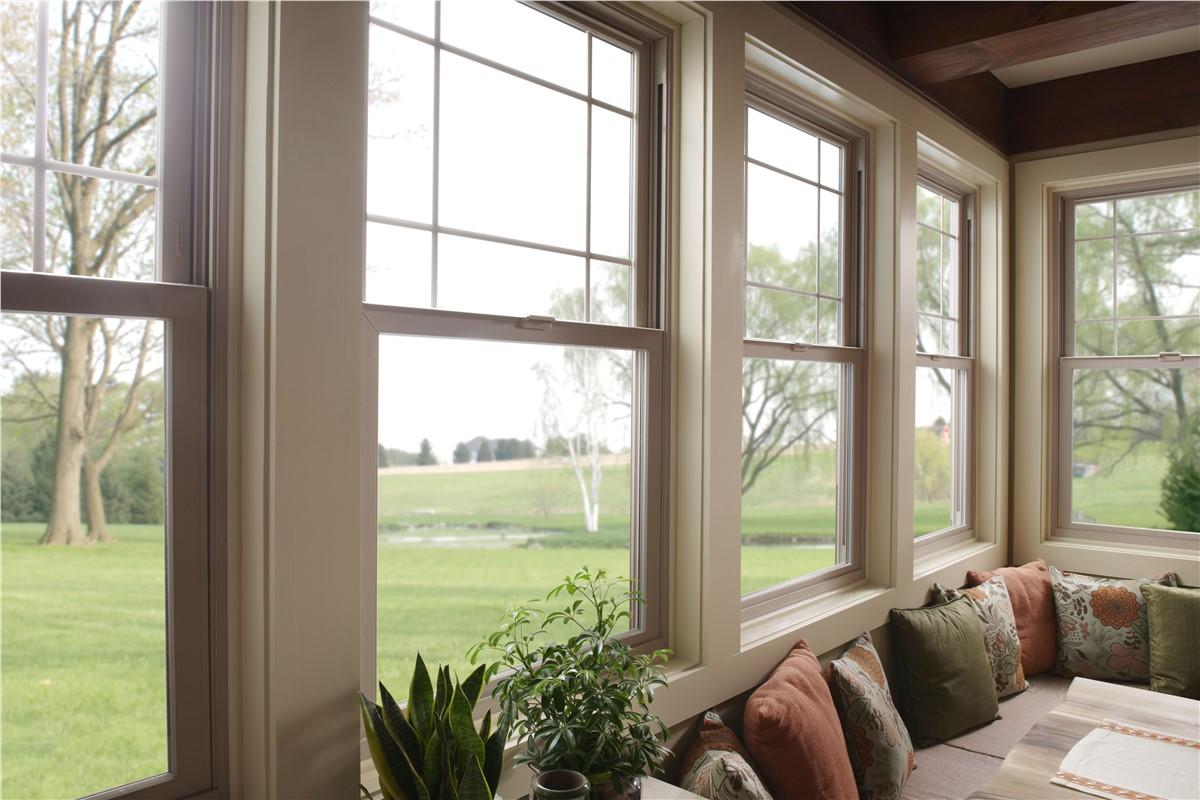
Vinyl frames are generally thicker than aluminum or fiberglass frames at the same price point. That means the border around the glass is wider, which slightly reduces the visible glass area. For most homes this is a minor consideration, but if you’re replacing windows in a room where natural light is already limited, it’s worth factoring in.
Standard vinyl holds color well in lighter shades. Darker colors, particularly on lower-grade products, can fade with prolonged UV exposure. Premium vinyl with exterior capstock layers handles this much better. If you’re planning to stay in your home for 20-plus years and color consistency matters to you, it’s worth asking about fade warranties specifically.
Modern profiles are cleaner than they used to be, but if you’re restoring an older home and want frames that read as authentic wood, vinyl won’t get you there. Fiberglass and wood-composite options can be finished and painted to more closely replicate the look of traditional wood windows. For most contemporary and suburban homes this isn’t a concern, but it’s a legitimate limitation for anyone working within preservation guidelines or trying to maintain a specific historical aesthetic.

Wood windows are thermally comparable to vinyl when well-maintained. The problem is the “well-maintained” part. Wood requires regular painting or staining to prevent rot, warping, and moisture damage. In climates with significant humidity or temperature swings, that maintenance cycle is genuinely demanding. Vinyl gives up nothing meaningful in performance to wood while eliminating that upkeep entirely.
Wood remains the choice for historic restoration or when building codes require it. For standard replacement projects, the maintenance difference is the deciding factor for most homeowners. Our guide to window types and styles covers the full material landscape if you want more context.
Aluminum frames are thinner and stronger than vinyl at equivalent sizes, which means more glass and less frame. They’re also more dimensionally stable—they won’t expand and contract as much with temperature changes. The significant drawback is thermal conductivity. Aluminum transfers heat readily, which undermines energy performance unless the frame includes a thermal break. Even with a thermal break, aluminum frames generally underperform vinyl on energy efficiency.
Aluminum holds up well in coastal environments where salt air is a concern, but so does quality vinyl. For most inland replacement projects, vinyl delivers better energy performance at a lower cost. For hurricane and impact-rated applications, reinforced vinyl handles the structural requirements without the thermal inefficiency of aluminum.
Fiberglass windows cost significantly more than vinyl, and for most replacement projects, the price difference is hard to justify. Premium vinyl performs well on energy efficiency, durability, and weather resistance—well enough that the average homeowner won’t notice a functional difference in day-to-day use.
Where fiberglass pulls ahead is in dimensional stability and long-term color retention. It handles temperature extremes with less expansion and contraction than vinyl, accepts paint more reliably, and holds its shape over a longer service life. For homeowners planning to stay in a home for several decades and willing to pay more upfront, fiberglass is worth a look. For most replacement projects, premium vinyl delivers comparable performance at a more accessible price point.
Composite frames blend wood fiber and PVC or other polymers to get closer to wood’s look and feel while improving moisture resistance. The result sits between wood and vinyl in both performance and cost. Composite handles paint better than vinyl and can more convincingly replicate wood grain, so if vinyl isn’t available in your preferred color, it may be worth consideration.
For a deeper look at how vinyl relates to PVC specifically, the vinyl vs. PVC breakdown covers the material distinction in detail.
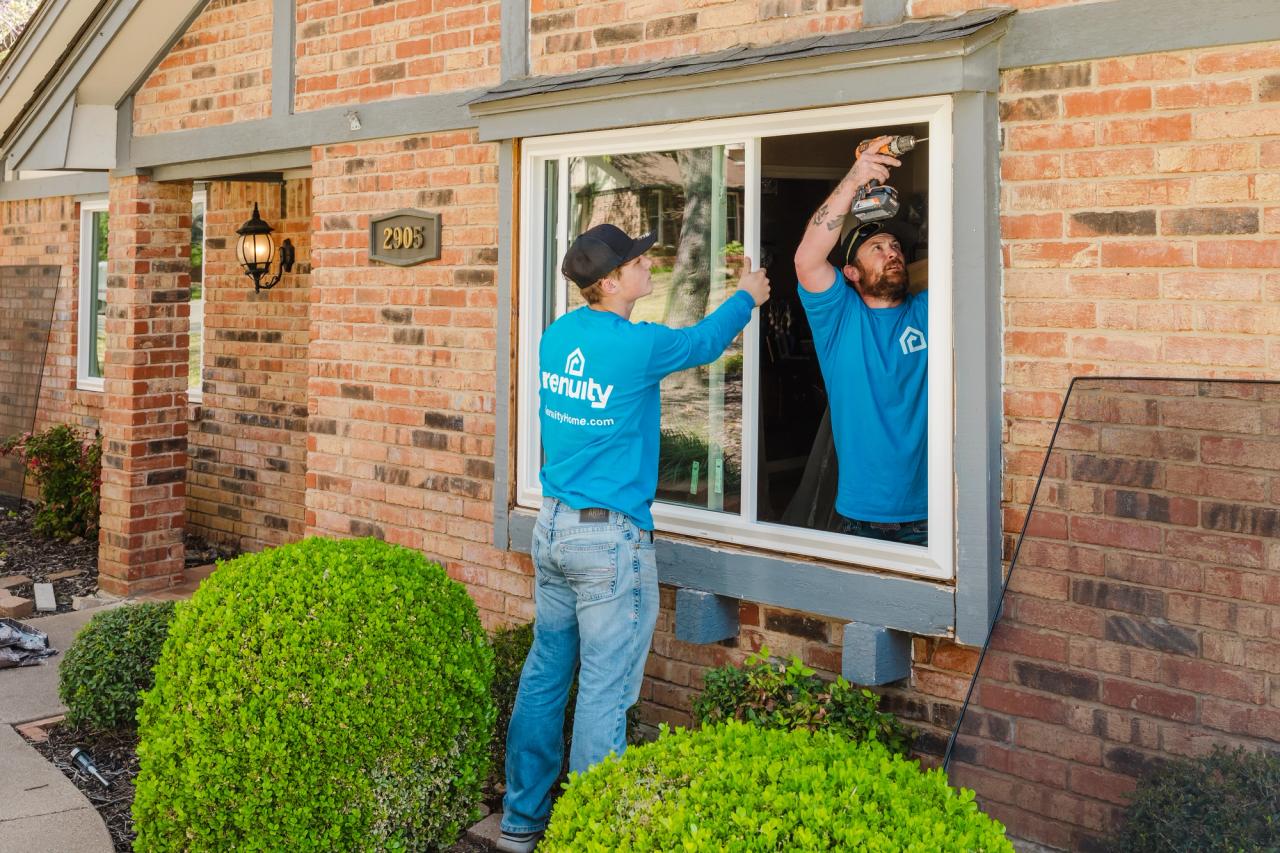
A well-made vinyl window installed correctly typically lasts 20 to 40 years. That range is wide because it reflects real variation in product quality, installation quality, and climate. A premium vinyl window installed by an experienced crew in a moderate climate will greatly outlast a budget window poorly installed in a region with extreme temperature swings.
The signs that a vinyl window is nearing the end of its life are easy to spot: drafts you can feel near the frame, condensation forming between the panes, hardware that no longer operates smoothly, or visible warping and seal failure. A window that’s failing on any of those fronts is costing you money in energy loss and will only get worse.
At that point, replacement is past due.
Vinyl windows are the right call for the majority of replacement projects. They perform well, require minimal upkeep, and come in enough styles to work on most homes. The cases where another material makes more sense—historic restoration, extreme climate performance, very long-term investment horizons—are real but relatively narrow.
If you’re not sure whether vinyl is the right fit for your home, Renuity’s window specialists can walk you through the options. Browse our full window product line or schedule a free in-home consultation to get a site-specific recommendation and estimate.

As a content manager at Renuity, Francheska spent nearly two years helping homeowners discover the possibilities of transforming their spaces. Renuity is a leader in home remodeling, specializing in everything from windows and doors to bathrooms and home storage solutions, and she’s proud to be part of a team that prioritizes quality, innovation, and customer satisfaction. She graduated from Florida International University with a double major in International Business and Marketing, ranked among the top programs in the nation. Her passion for home improvement runs deep—since childhood, she’s been inspired by watching HGTV and seeing the magic of remodels come to life. Now, she channels that passion into connecting readers with ideas, tips, and solutions to create homes they love.
Renuity is backed by top industry ratings and trusted by homeowners nationwide for quality, service, and reliability.





Offer expires:
plus 12 months, no interest,no or low monthly payments
claim offer
Get a free, no-obligation estimate and see how easy it is to upgrade to your dream home. One of our local specialists will reach out to schedule your consultation—on your terms.
At Renuity, our greatest pride comes from the trust homeowners place in us and the lasting results we deliver. From seamless installations to transformative home upgrades, we’re committed to making every project simple, stress-free, and built to last. Our family of regional brands includes some of the most respected names in remodeling nationwide, all united by proven expertise and a shared commitment to exceptional service. See how we’ve made a difference for families nationwide and what they have to say about their experiences with Renuity.

Very professional, pleasant, ahead of schedule . Dealing with Danny Guthrie was pleasant and answered all our questions. Their were no other surprise costs. We loved the service, the contractors wer...
All the people we have dealt with from Renuity from the sales rep, office administration & the installers, have been very good to deal with. On the first day of the installation, they found dry rot un...
This was a very pleasant experience. Lance, my salesperson, was very professional and understood my concerns and needs. Blake and Sebastian, the installers of my new shower remodel, were friendly, har...
We have used Renuity Home Improvement (formerly FHIA) five different times, and every experience has been excellent. They replaced the windows in our previous two homes, completed our parents’ two hom...
We are so pleased with our new shower ! The installing crew were friendly, professional and on time. The appearance of the modern shower is so lovely. We would recommend this company 100% if you wa...
Excellent salesman Wesley was .kind, friendly and knowledgeable...great guy. The brothers were Excellent and beyond, superb work by them and they were fast with the installation. No better place to h...
We had a roof and windows installed by this company. We had 4 companies we were interviewing. FHIA was the second one we met with. Josh came to our home to present their products and servies to us. I...
Great workmanship. Great job. The workers was very professional and explained the installation. Clean up after the job was completed. I would definitely recommend this crew to anyone interest. Thanks...
Conde was very nice and professional with his work , and they kept me informed of the job as it went forward. These are nice windows that should be trouble free for a long time. They were thorough thr...
Now that windows all installed I am pleased with the work, clean up, craftsmanship of products I am pleased. Conscientious of others property. Installed with great care of surroundings. Do recommend...