Trusted By Over 250,000 Customers!
No Interest, No Payments for 12 months on Select Products
No Interest, No Payments for 12 months on Select Products
What are French doors? It’s a question we hear quite often, and as nationwide providers helping homeowners update their windows, doors, and more, we’re happy to explain.
Whether you’re planning a remodel or just curious, we’ll walk you through the basics and benefits. For more insights, browse our articles or connect with one of our experts directly. You can also view our broader door offerings through our exterior doors and French doors pages.
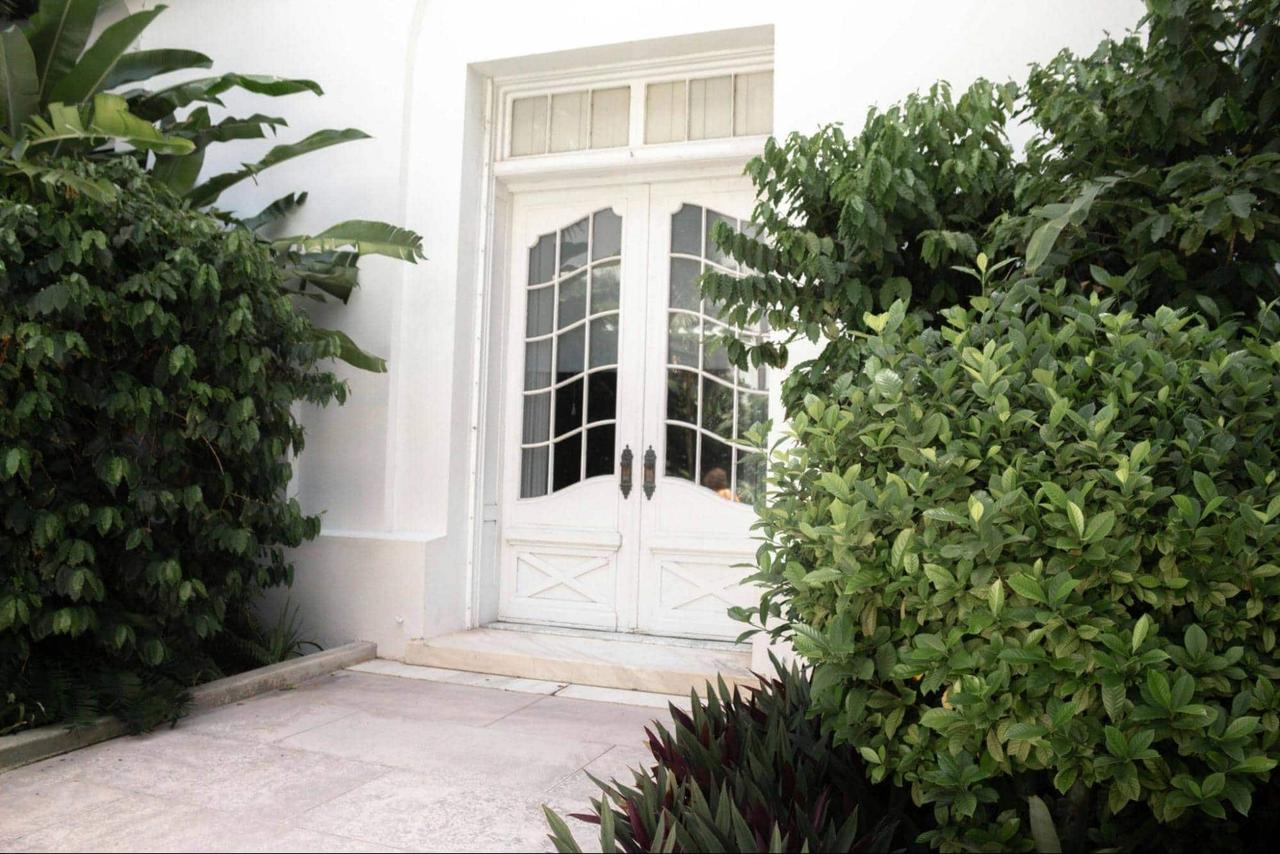
French doors, sometimes referred to as French windows, are simply a set of two doors, usually hinged, that swing open from the center. What really sets them apart is their extensive use of glass. Most of the door’s surface is made up of individual glass panes or a single large pane framed by wood, fiberglass, or other sturdy materials. The result is a door that connects two spaces and invites natural light to flow freely between them.
Other things that set these apart are that they work in pairs, opening wide to create a much larger passage than your typical single door, perfect for bringing in more fresh air. Compared to sliding glass doors, French doors offer a more classic architectural look. Plus, you’ll have the option of opening one side or both. And unlike solid interior doors, which block light and limit visibility, these create a sense of openness, even when closed.
Traditional French doors have been brightening up homes for hundreds of years, and of course their story starts in France. These doors debuted back in the 17th century, right around the time the Renaissance influenced everything from art and architecture to how homes were designed. French architects designed these doors to offer more natural light, symmetry, and an open feel rather than boxed in.
Over time, their look evolved, but the core concepts remained the same. You’ll still find glass-heavy panels framed by wood or other materials that open wide to let in light, air, and a clear view.
You’ll find modern French doors in just about every style of home, from classic colonials to modern builds. And thanks to improvements in energy efficiency, weatherproofing, and customization, they’ve gone from strictly decorative to fully functional, blending beauty and practicality. Homeowners looking for more customization can explore options like custom doors for design flexibility.
These versatile doors bring a whole list of perks to the table. Let’s start with some reasons why homeowners choose French doors:
That’s not to say these doors are perfect for every home. While they have plenty of strengths, here are a few downsides to consider before committing:
For homeowners comparing front-entry options, our guide on entry door ideas offers additional style considerations.
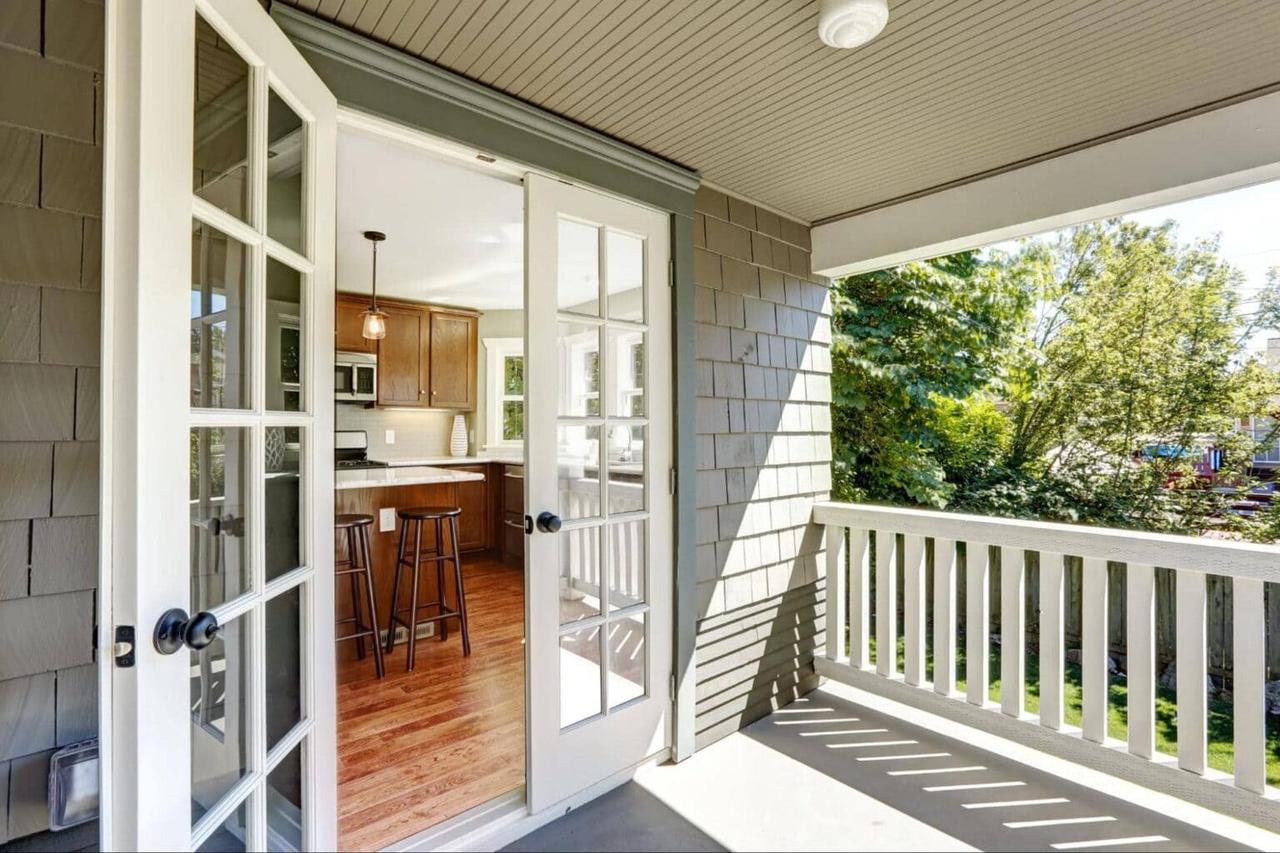
French doors might all share the same basic idea, but that doesn’t mean they all look or function the same way. There are many options out there, with styles matching your home’s personality and personal taste.
This is the definition of traditional French doors: two doors hinged on either side, meet in the middle, and swing open from the center. They’re popular for patios, garden doors, or even interior dividers between living spaces. Many homeowners pair them with patio doors for coordinated outdoor access.
Love the look of French doors but tight on space? Sliding versions bring the same glass-forward style, but instead of swinging open, they glide along a track, taking up less space.
When you want to blur the line between your indoor and outdoor spaces, exterior doors are the way to go. These connect living rooms to patios, kitchens to backyards, and bedrooms to balconies, combining function, beauty, and gorgeous natural light.
If you’re planning for your home’s French door installation, getting the right size is key. Luckily, standard French door sizes cover a wide enough range to fit most homes.
There’s some flexibility for standard French door sizes, but they usually follow familiar patterns. Most sets of two range from 60 to 72 inches wide, though you’ll sometimes see narrower pairs around 48 inches or wider setups pushing 96 inches. Height-wise, the typical range runs from 80 to 96 inches, with 80 inches (the same as most interior doors) the most common.
Of course, custom French door sizes are always an option if your space doesn’t fit neatly into those measurements.
Measuring a space for French doors isn’t complicated, but it does require precision. Here’s a simple guide to measuring French doors the right way:
One of the biggest perks of French doors — all that natural light pouring in — can also pose a challenge when you’re trying to strike the right balance between privacy and insulation. The right window treatments can make all the difference.
Popular options include:
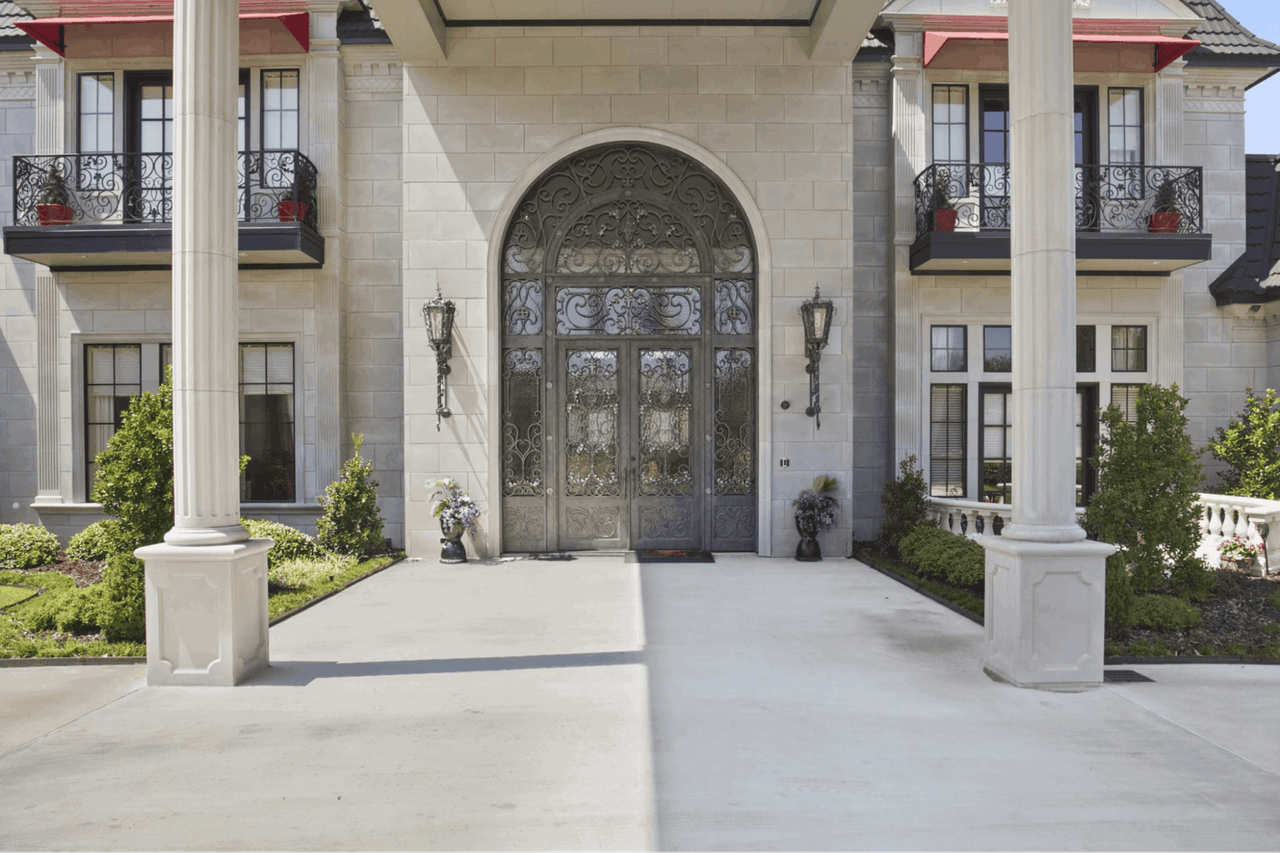
French door installation requires precision. The doors need to align perfectly so they meet evenly in the center. This is especially important when upgrading with replacement doors so the new frame seats properly.
Once installed, regular care keeps them looking great:
French doors are a perfect blend of form and function. They bring in natural light, open up your space, and add timeless character to your home. With so many styles and treatments, there’s no shortage of ways to find the perfect French door for your home’s unique look and needs.
If you’re still unsure which type of door fits your style, space, and budget, get in touch with our experts. Our full line of doors makes it easy to compare options.
Why do they call it a French door?
The name comes straight from France. Architects of the 17th century who loved symmetry, glass, and light created these elegant entryways to brighten interiors and connect indoor and outdoor spaces effortlessly.
What is the difference between a double door and a French door?
While both have two door panels, French doors are all about glass to let in light and offer better views. Standard double doors are usually solid or have small windows.
Which is cheaper: French doors or sliding doors?
Sliding doors are usually much cheaper because they’re simpler to manufacture and install.
What is the standard size of a double door?
Most standard double doors run 72 inches wide and 80 inches tall.
What is the smallest width of a French door?
The narrowest sets typically start around 48 inches for the pair.
What are the disadvantages of French doors?
They need space to swing open, require more cleaning due to glass, and can be less insulated than solid doors.

As a content manager at Renuity, Francheska spent nearly two years helping homeowners discover the possibilities of transforming their spaces. Renuity is a leader in home remodeling, specializing in everything from windows and doors to bathrooms and home storage solutions, and she’s proud to be part of a team that prioritizes quality, innovation, and customer satisfaction. She graduated from Florida International University with a double major in International Business and Marketing, ranked among the top programs in the nation. Her passion for home improvement runs deep—since childhood, she’s been inspired by watching HGTV and seeing the magic of remodels come to life. Now, she channels that passion into connecting readers with ideas, tips, and solutions to create homes they love.
Renuity is backed by top industry ratings and trusted by homeowners nationwide for quality, service, and reliability





Offer expires:
Get a free, no-obligation estimate and see how easy it is to upgrade to your dream home. One of our local specialists will reach out to schedule your consultation—on your terms.
At Renuity, our greatest pride comes from the trust homeowners place in us and the lasting results we deliver. From seamless installations to transformative home upgrades, we’re committed to making every project simple, stress-free, and built to last. Our family of regional brands includes some of the most respected names in remodeling nationwide, all united by proven expertise and a shared commitment to exceptional service. See how we’ve made a difference for families nationwide and what they have to say about their experiences with Renuity.
Very professional, pleasant, ahead of schedule . Dealing with Danny Guthrie was pleasant and answered all our questions. Their were no other surprise costs. We loved the service, the contractors wer...
All the people we have dealt with from Renuity from the sales rep, office administration & the installers, have been very good to deal with. On the first day of the installation, they found dry rot un...
This was a very pleasant experience. Lance, my salesperson, was very professional and understood my concerns and needs. Blake and Sebastian, the installers of my new shower remodel, were friendly, har...
We have used Renuity Home Improvement (formerly FHIA) five different times, and every experience has been excellent. They replaced the windows in our previous two homes, completed our parents’ two hom...
We are so pleased with our new shower ! The installing crew were friendly, professional and on time. The appearance of the modern shower is so lovely. We would recommend this company 100% if you wa...
Excellent salesman Wesley was .kind, friendly and knowledgeable...great guy. The brothers were Excellent and beyond, superb work by them and they were fast with the installation. No better place to h...
We had a roof and windows installed by this company. We had 4 companies we were interviewing. FHIA was the second one we met with. Josh came to our home to present their products and servies to us. I...
Great workmanship. Great job. The workers was very professional and explained the installation. Clean up after the job was completed. I would definitely recommend this crew to anyone interest. Thanks...
Conde was very nice and professional with his work , and they kept me informed of the job as it went forward. These are nice windows that should be trouble free for a long time. They were thorough thr...
Now that windows all installed I am pleased with the work, clean up, craftsmanship of products I am pleased. Conscientious of others property. Installed with great care of surroundings. Do recommend...